In memory of Ed Yourdon
[caption id="attachment_296" align="alignnone" width="776"]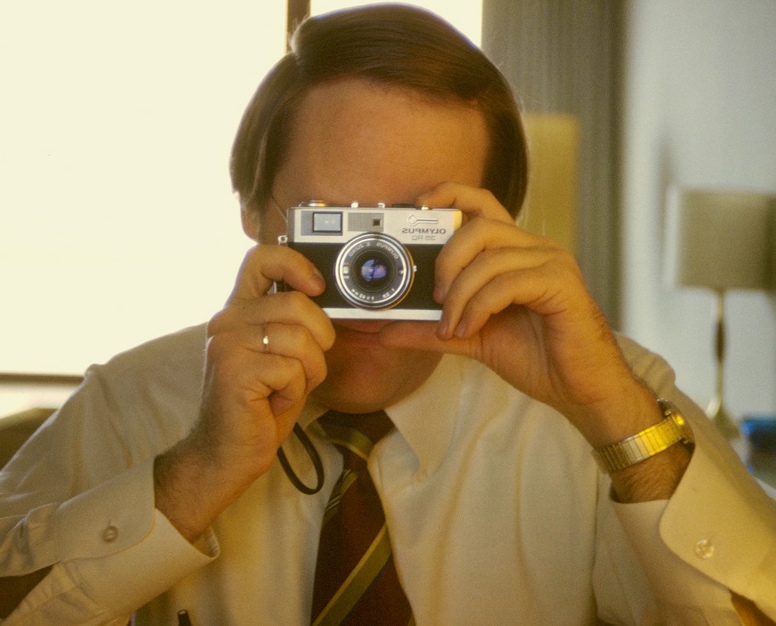 Photo credit Ed Yourdon[/caption]
– Ed Yourdon, “Past, Present and Future”, in Rise and Resurrection of the American Programmer, Yourdon Press, 1996
At every stage in my professional life I met and got to know people I consider mentors and role models. Some were pioneering technologists who pushed the boundaries of the software industry. Others were professors, coworkers and leaders. Each person I admire and respect in a different way to this day. I would like to talk about one in particular who has been crucial to my growth as a professional and a human being.
When I was in college in the late 1990s I came upon two books: “Decline and Fall of the American Programmer” and “Rise and Resurrection of the American Programmer” by Ed Yourdon. The first book spelled doom and gloom for the American Programmers who were going to get replaced by cheaper counterparts in India, Russia, Philippines, etc. The second book revisited some of the predictions based on the changes that the software industry has undergone in the years between the books. Both books were incredibly thought provoking. To this day they occupy a prominent spot on the bookshelf in my home.
Computers are remarkable devices that only humans, as species of this planet, could conjure up. Software development is the most cognitively complex task humanity has ever set out to pursue. In computer science and software engineering we work with things that we ourselves build. If a computer fails, one can say that it failed because the engineer who built it did not know what they were doing.
Building on the work of Aristotle, Alexander of Aprodisias developed a notion of a stochastic art:
In software, everything is in the power of the engineer to produce a quality product. Software either works and serves the needs of the users or it does not. In photography, however, we deal with things not of our own making. Many software engineers gravitate towards photography as a way to settle the mind, to unwind, and to work with things and events we have no control over. The desire to be in the moment without being able to “debug” and retry is uniquely human.
As I entered the professional world of software engineering I too developed a hobby in photography. Sometime in 2005 I was looking through Flickr groups for ideas and techniques and came upon Ed Yourdon’s Flickr account. The same computer scientist whom I admired in college turned out to also be a prolific street photographer.
As a photographer he was no William Klein or Brandon Stanton, but he added his own unique flair to photography. Photography was like a diary for him. By following Ed on Flickr one not only got to know his beloved New York City but also Ed as a person. His NYC street photos such as these inspired my own attempts at street photography.
Thanks to social media I became friends with Ed and got to know him closer. As we both developed our hobbies we exchanged ideas. Checking up on his photography became part of my morning routine. He commented on my photos and gave me tips. He accepted my ideas and tried new techniques. As inductees into the Computer Science Hall of Fame go, he was open, kind and friendly.
Moses Ben Maimon (aka Maimonides) lived over 800 years ago. With his studies and writings he influenced thinkers of his time and his work is studied the world over even today. We remember him today because of the things he wrote, and what was written by others about him.
What Ed was striving to accomplish throughout his professional career and his hobbies was to make the world a better place and to leave a footprint. He published dozens of books and hundreds of articles explaining complex topics to the rest of us. He posted thousands of photos to his Flickr account. It is nearly impossible to search for an NYC street photo on Flickr and not stumble upon Ed Yourdon's pictures. His photos, which he gave away via creative commons, have been used in thousands of blog posts and articles.
In the past few years, when someone asked me that cliche interview question “Oleg, where do you see yourself in the future?” I would respond “Do you know Ed Yourdon ? I want to be like him!” On occasion he would drop me an email encouraging me to develop professionally. It was by following his example and tips that I’ve improved my writing and became a contributing blogger at “Computerworld”.
He posted to his Flickr account almost daily. It was rare for him to take more than a few days away from photographing and posting. His last post was on December 24th, 2015. After a few of weeks of not seeing updates or hearing from him I suspected something was wrong. On Thursday morning, January 21st, I saw this in my Flickr notifications:
Ed Yourdon is a Maimonides of our generation. His work in computer science and software engineering shaped our industry at a time when it needed structure. His photography gave us a glimpse into his life and his values. The world is in a better place now because of Ed. He will be greatly missed.
Photo credit Ed Yourdon[/caption]Every generation assumes, in its youth, that it is immortal and omnipotent. And every generation of children ignores the advice of its parents, believing that their circumastances are so new and different that the lessons of their parent’s lives simply wouldn’t apply. On the surface, this seems to be true in computer field, too: Why would today’s young Java programmer believe there is anything to be learned from experiences of a mainframe COBOL programmer ?
Ironically, this attitude of generational arrogance is part of the basis for my optimism for the American software industry. If today’s generation of software developers followed in the footsteps of their elders and used the same kind of technology and practices, they would be subject to the same kind of crushing competitive pressures that the older generation is facing around the world. But they don’t – they prefer, instead, to leapfrog over the older technologies and plunge into something new. And in most cases, the older generation encourages them to do so; even if we’re trapped in our old paradigms and technologies, we have enough sense to encourage our children to try something newer.
– Ed Yourdon, “Past, Present and Future”, in Rise and Resurrection of the American Programmer, Yourdon Press, 1996
At every stage in my professional life I met and got to know people I consider mentors and role models. Some were pioneering technologists who pushed the boundaries of the software industry. Others were professors, coworkers and leaders. Each person I admire and respect in a different way to this day. I would like to talk about one in particular who has been crucial to my growth as a professional and a human being.
When I was in college in the late 1990s I came upon two books: “Decline and Fall of the American Programmer” and “Rise and Resurrection of the American Programmer” by Ed Yourdon. The first book spelled doom and gloom for the American Programmers who were going to get replaced by cheaper counterparts in India, Russia, Philippines, etc. The second book revisited some of the predictions based on the changes that the software industry has undergone in the years between the books. Both books were incredibly thought provoking. To this day they occupy a prominent spot on the bookshelf in my home.
Computers are remarkable devices that only humans, as species of this planet, could conjure up. Software development is the most cognitively complex task humanity has ever set out to pursue. In computer science and software engineering we work with things that we ourselves build. If a computer fails, one can say that it failed because the engineer who built it did not know what they were doing.
Building on the work of Aristotle, Alexander of Aprodisias developed a notion of a stochastic art:
Given materials, tools, and other conditions, carpentry, e.g., can produce houses by following a series of steps each of which is effective in a determinate way. However, medicine does not always cure and certainly does not cure with the reliability that carpentry produces houses. Even though medicine tries everything in its power, chance can intervene so that it does not achieve its goal, the curing of the patient. When carpentry, by contrast, tries everything in its power, it achieves its goal. Failure here is the result not of chance but of error in executing the technê, as Alexander says in Quaestiones (Quaestio 2.16, 10-25). To mark the difference between these two kinds of technê, Alexander says that the task (ergon) of medicine is to try everything possible to achieve its goal (telos); but achieving its goal is not (totally) within the power of medicine. He calls stochastic, then, the sorts of technê whose task is to try everything possible to achieve their goal, the realization of the goal being subject to chance.
In software, everything is in the power of the engineer to produce a quality product. Software either works and serves the needs of the users or it does not. In photography, however, we deal with things not of our own making. Many software engineers gravitate towards photography as a way to settle the mind, to unwind, and to work with things and events we have no control over. The desire to be in the moment without being able to “debug” and retry is uniquely human.
As I entered the professional world of software engineering I too developed a hobby in photography. Sometime in 2005 I was looking through Flickr groups for ideas and techniques and came upon Ed Yourdon’s Flickr account. The same computer scientist whom I admired in college turned out to also be a prolific street photographer.
As a photographer he was no William Klein or Brandon Stanton, but he added his own unique flair to photography. Photography was like a diary for him. By following Ed on Flickr one not only got to know his beloved New York City but also Ed as a person. His NYC street photos such as these inspired my own attempts at street photography.
Thanks to social media I became friends with Ed and got to know him closer. As we both developed our hobbies we exchanged ideas. Checking up on his photography became part of my morning routine. He commented on my photos and gave me tips. He accepted my ideas and tried new techniques. As inductees into the Computer Science Hall of Fame go, he was open, kind and friendly.
Moses Ben Maimon (aka Maimonides) lived over 800 years ago. With his studies and writings he influenced thinkers of his time and his work is studied the world over even today. We remember him today because of the things he wrote, and what was written by others about him.
What Ed was striving to accomplish throughout his professional career and his hobbies was to make the world a better place and to leave a footprint. He published dozens of books and hundreds of articles explaining complex topics to the rest of us. He posted thousands of photos to his Flickr account. It is nearly impossible to search for an NYC street photo on Flickr and not stumble upon Ed Yourdon's pictures. His photos, which he gave away via creative commons, have been used in thousands of blog posts and articles.
In the past few years, when someone asked me that cliche interview question “Oleg, where do you see yourself in the future?” I would respond “Do you know Ed Yourdon ? I want to be like him!” On occasion he would drop me an email encouraging me to develop professionally. It was by following his example and tips that I’ve improved my writing and became a contributing blogger at “Computerworld”.
He posted to his Flickr account almost daily. It was rare for him to take more than a few days away from photographing and posting. His last post was on December 24th, 2015. After a few of weeks of not seeing updates or hearing from him I suspected something was wrong. On Thursday morning, January 21st, I saw this in my Flickr notifications:
Sadly, Ed Yourdon died on January 20, 2016 as a result of complications from a blood infection. Photography was one of his great passions in life. He greatly enjoyed the camaraderie he found via Flickr.
Ed Yourdon is a Maimonides of our generation. His work in computer science and software engineering shaped our industry at a time when it needed structure. His photography gave us a glimpse into his life and his values. The world is in a better place now because of Ed. He will be greatly missed.